Motorhome Winter Storage
Choosing the right environment and taking the time to position your vehicle correctly saves you from headaches next spring.
Why Seasonal Preparation Matters
Listen, we've all been tempted to just park up in November, lock the doors, and walk away until Easter. But a motorhome is a complex machine—half commercial vehicle, half apartment. Leaving it unattended without a deliberate storage strategy invites dampness, flat spots on tyres, seized handbrakes, and a ruined leisure battery.
Proper winter storage is about controlling the environment around and inside your motorhome as much as possible, mitigating the damage that prolonged standing and freezing temperatures can cause.
Indoor Versus Outdoor Storage
The choice between indoor and outdoor storage usually comes down to availability and budget, but it is worth understanding exactly what you are paying for, and what factors affect those costs.
| Storage Type | Advantages | Limitations |
|---|---|---|
| Indoor Climate-Controlled | Total protection from UV, frost, and storms. Consistent temperature. | Highest cost factor; often limited access hours; high seasonal demand. |
| Indoor (Barn/Shed) | Protection from rain, snow, and UV. Good ventilation usually. | Susceptible to freezing temperatures and occasionally pests. |
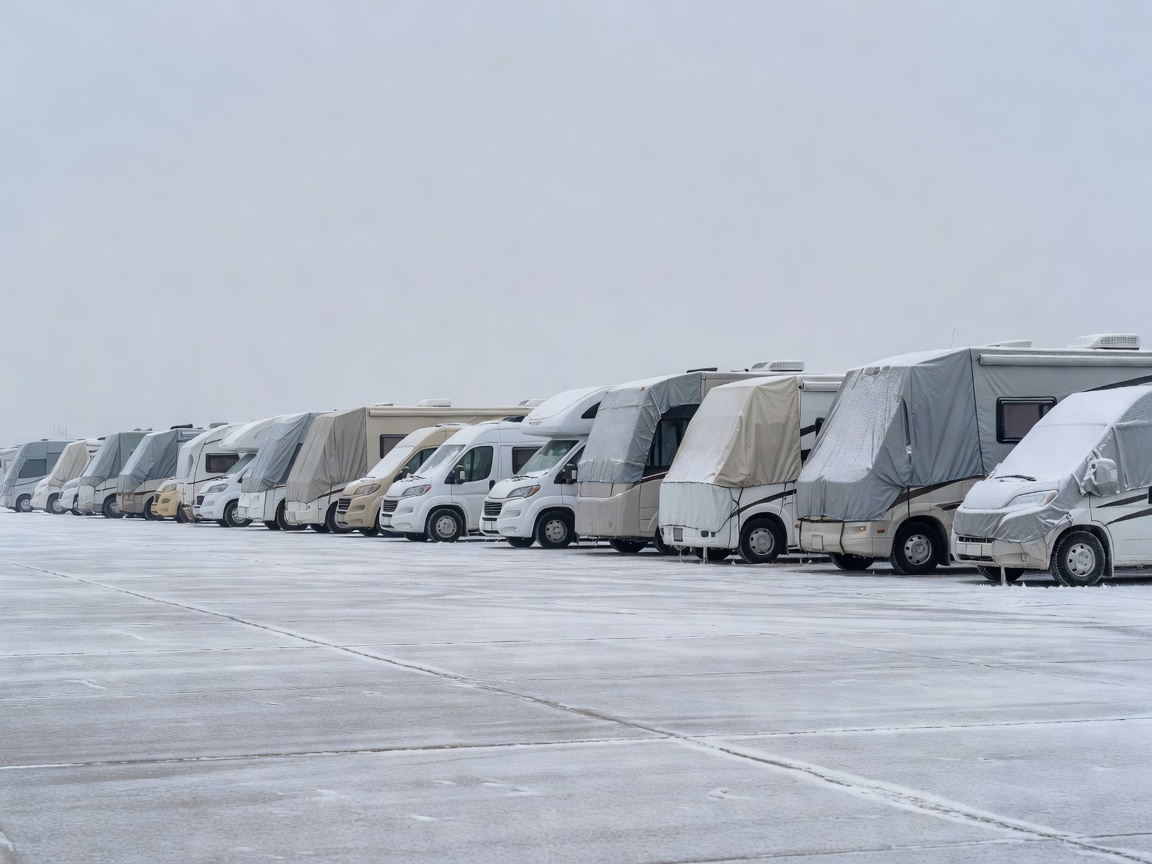
| Outdoor (Hardstanding) | Easier access; lower cost; good drainage if prepared right. | Full exposure to winter weather; requires diligent exterior protection. |
| Outdoor (Grass/Field) | Often the cheapest available option in rural locations. | High risk of sinking, rising damp, and getting stuck in spring. |
Storage costs are generally influenced by the vehicle's size, the type of storage, the duration, the facility's location (proximity to major cities), and the level of access permitted. An urban, 24/7 access, climate-controlled bay will naturally command a premium over a farmer's hardstanding pitch.
Vehicle Positioning and Tyres
When you arrive at your chosen storage spot, take a moment. Ensure the motorhome is parked on level ground. If you're outdoors, try to park with a slight nose-down or nose-up tilt to ensure water completely drains off the roof, preventing pooling around skylights.
Tyres left bearing the full weight of a heavy motorhome in one spot for months can develop flat spots. If possible, over-inflate the tyres slightly (check your manufacturer's limits) or use tyre savers (curved ramps). Chock the wheels securely, and importantly, leave the handbrake off. A handbrake left engaged for four months in damp conditions is highly likely to seize to the drum.
Cover Considerations
If you're storing outdoors, a cover seems like a no-brainer. But use caution. A cheap, non-breathable cover will trap moisture against the bodywork, promoting mould and potentially damaging the finish. If you use a cover, invest in a tailored, fully breathable one. Before fitting it, the motorhome must be spotlessly clean; any grit trapped between the cover and the paintwork will act like sandpaper in the winter wind.
Security and Regular Checks
Before you leave, check your insurance policy. Most insurers have strict stipulations about storage security—requiring wheel clamps, steering locks, or specific perimeter fencing ratings.
Finally, winter storage isn't a "fire and forget" operation. Plan to visit the vehicle every 4 to 6 weeks. Open the doors to cycle the air, check the leisure battery voltage, and inspect the interior for any signs of moisture or unwelcome guests.